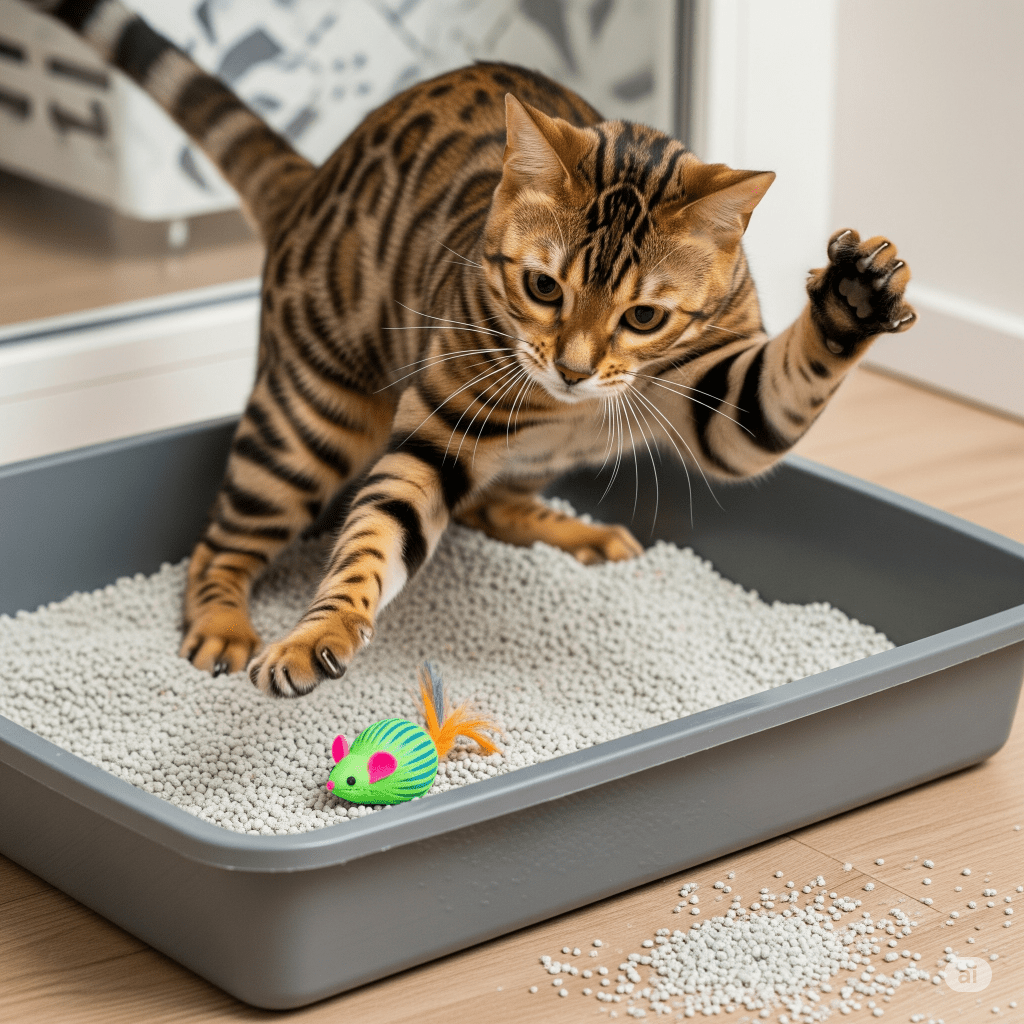
As a cat owner, the litter box is a daily reality. But have you ever stopped to think about the science behind that everyday essential? It seems simple enough: a box of granules that magically absorbs your cat’s waste. But there’s more to it than meets the eye.
At DSPetStore.com, we believe that understanding your pet’s products helps you make the best choices for their health and your home. So, let’s break down the different types of cat litter and the clever ways they keep your home smelling fresh and clean.
The Power of Absorption: Clumping vs. Non-Clumping
The two main categories of cat litter, clumping and non-clumping, work on fundamentally different principles.
- Non-Clumping Litter: This is the original form of cat litter, often made from materials like clay or recycled paper. It works through simple absorption. The granules act like tiny sponges, soaking up liquids and trapping odors. However, because it doesn’t clump, the saturated litter remains mixed with the clean litter. This means you need to scoop out solids and periodically replace the entire box of litter to maintain hygiene and odor control.
- Clumping Litter: This is the most popular type today, and its effectiveness lies in its primary ingredient: bentonite clay. When bentonite clay gets wet, it swells up to 15 times its original volume, forming a solid, scoopable clump. This is a game-changer for several reasons:
- Easy Cleanup: Instead of sifting through the entire box, you can simply scoop out the clumps and solids. This makes daily maintenance a breeze.
- Better Odor Control: By locking the waste in a solid clump, the odor-causing bacteria are encapsulated, preventing smells from wafting through your home.
- Less Waste: You only remove the soiled litter, which means you use less product over time compared to non-clumping varieties.
Specialized Litters: Taking It a Step Further
Beyond the basic clumping and non-clumping varieties, many litters incorporate advanced technology to improve performance.
- Silica Gel Litter: Made from silica gel crystals, this litter works by absorbing moisture and dehydrating waste. The crystals have a porous structure that traps liquid and odor molecules. The solid waste is scooped out, and the crystals remain effective for an extended period, often lasting for up to a month before a full change is needed. This is an excellent option for long-term odor control and minimal dust.
- Natural Litters: For environmentally conscious cat owners, natural litters made from materials like pine, corn, wheat, or walnut shells are a popular choice. These litters work similarly to clumping clay, but their binding agents are plant-based. They rely on the natural absorbent properties of the materials to form clumps, offering a biodegradable and often dust-free alternative.
The Secret to a Successful Litter Box
No matter which type of litter you choose, the key to a happy cat and a fresh-smelling home is proper maintenance. Daily scooping, regular full cleanings, and ensuring the litter box is in a quiet, accessible location are all essential.
Want to learn more about choosing the right litter for your feline friend? Explore our full range of high-quality cat litters at https://dspetstore.com/collections/cat-litter and find the perfect fit for your pet’s needs.
 DsPetStore Blog
Leave a comment