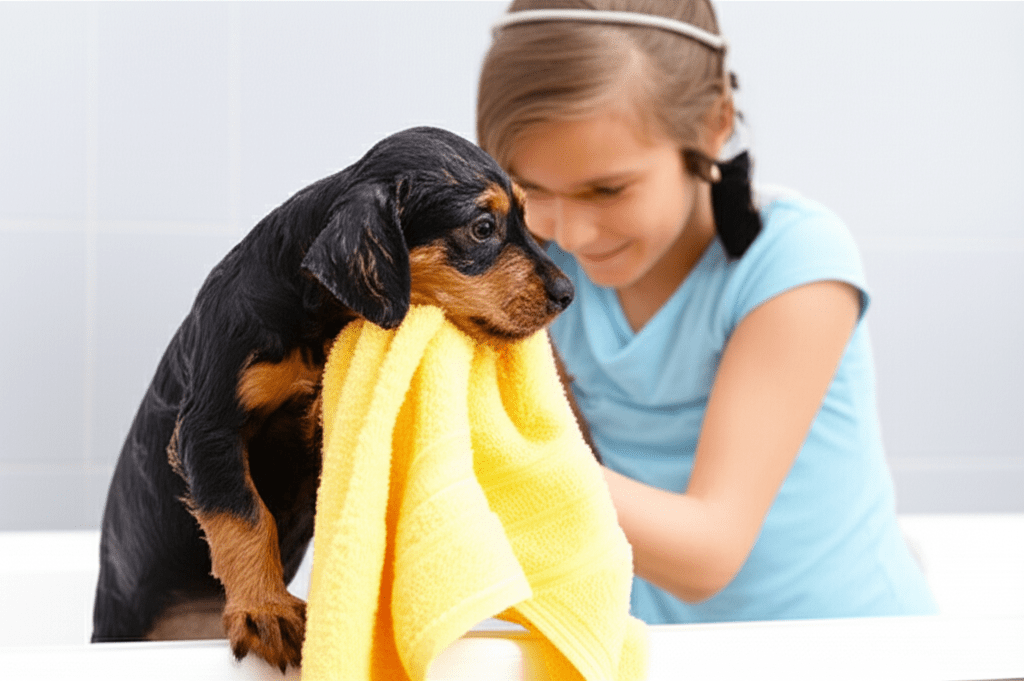
Giving your furry friend a bath at home can be a rewarding experience for both of you, strengthening your bond while keeping them clean and healthy. While it might seem daunting at first, with the right approach and proper preparation, a stress-free and effective bathing routine can be established. This guide will walk you through the entire process, from understanding bathing frequency to drying techniques, ensuring your dog looks and feels their best.
How Often Should You Bathe Your Dog?
The ideal bathing frequency for your dog is a question often asked, and the answer, it turns out, is not a simple one-size-fits-all. Several factors are considered when determining how frequently your canine companion should be bathed.
- Breed and Coat Type: Different breeds possess unique coat types that necessitate varying bathing schedules. For instance, breeds with oily coats, like Basset Hounds, may require more frequent baths to manage oil buildup. On the other hand, breeds with water-repellent double coats, such as Siberian Huskies, are often bathed less frequently to preserve their natural oils. Dogs with long, flowing hair may also need more regular cleaning to prevent matting and tangles.
- Activity Level: An active dog that spends a great deal of time outdoors, rolling in mud or swimming, will undoubtedly need more frequent baths than a sedentary indoor pet. Their exposure to dirt, allergens, and other environmental elements increases the need for regular cleaning.
- Skin and Health Conditions: Certain skin conditions or allergies might necessitate specialized bathing routines. For example, dogs with dry, itchy skin might benefit from hypoallergenic shampoos and less frequent bathing, while those with skin infections could require more regular medicated baths as prescribed by a veterinarian. Always consult with your vet regarding any underlying health issues that might influence bathing frequency.
Is It Necessary to Bathe Every Day?
Generally, daily bathing is not recommended for most dogs. Overwashing can strip a dog’s skin of its natural oils, leading to dryness, irritation, and even skin infections. Their skin pH is different from humans, and frequent bathing with inappropriate products can disrupt their natural protective barrier.
When Daily Baths Are Necessary?
While rare, there are specific circumstances where daily bathing might be advised. This typically includes:
- Prescribed Medicated Baths: If your veterinarian has prescribed a medicated shampoo for a severe skin condition or infection, daily or very frequent bathing might be necessary for a limited period to treat the issue effectively.
- Severe Allergic Reactions: In cases of severe environmental allergies where the dog has come into contact with a strong allergen, a quick rinse or bath might be performed daily to remove irritants from their coat, under veterinary guidance.
How to Prepare for the Perfect Dog Bath Experience?
Preparation is key to a smooth and successful dog bath. A calm and organized approach will minimize stress for both you and your pet.
- Gather Your Supplies: Before bringing your dog near the bath, ensure all necessary items are within easy reach. This includes dog-specific shampoo and conditioner (never human products!), a brush, several towels, cotton balls for ears, and perhaps a non-slip mat for the tub. Having treats on hand can also be very helpful for positive reinforcement. For high-quality, dog-friendly bathing products, you can explore options at dspetstore.com.
- Brush Before Bathing: A thorough brushing before the bath is highly recommended. This helps to remove loose fur, dirt, and any tangles or mats that could become tighter and more difficult to remove once wet.
- Protect Your Dog’s Ears: Cotton balls can be gently placed in your dog’s ears to prevent water from entering the ear canal, which can lead to infections. Remember to remove them after the bath.
- Ensure a Safe and Comfortable Environment: Choose a bathing area where your dog feels secure. A bathtub with a non-slip mat is ideal. The water temperature should be lukewarm, never too hot or too cold.
How to Bathe a Dog: A Step-by-Step Dog Bath Guide
With preparation complete, the bathing process can begin. Patience and a gentle approach are paramount.
- Step 1: Wet the Coat: Gradually wet your dog’s entire coat with lukewarm water. A spray nozzle or a cup can be used to ensure thorough saturation, working from the neck downwards. Care should be taken to avoid spraying water directly into their face or ears.
- Step 2: Apply Shampoo: Once the coat is completely wet, a generous amount of dog shampoo can be applied. Work the shampoo into a rich lather, massaging gently through the fur, paying close attention to dirtier areas like paws and the belly. Avoid getting shampoo in their eyes.
- Step 3: Rinse Thoroughly: This is a crucial step that is often overlooked. All traces of shampoo must be rinsed from the coat. Residual shampoo can cause skin irritation and flakiness. The rinsing should continue until the water runs clear and no suds are visible. This may require multiple passes.
- Step 4: Dry Gently: After rinsing, allow your dog to shake off excess water. Then, gently towel-dry their coat. For dogs with thick fur, a hairdryer on a cool setting (held at a safe distance) can be used, but extreme care must be taken to avoid overheating or startling them. Positive reinforcement with treats can make this step more agreeable.
Dog Bath Tips: Mistakes You’re Probably Making and How to Avoid Them
Even with the best intentions, common mistakes can be made during dog baths. Being aware of these can help ensure a better experience for your pet.
- Using Inappropriate Products: Human shampoos and conditioners are formulated for human skin pH and can be too harsh for a dog’s delicate skin, leading to dryness and irritation. Always use dog-specific products.
- Overwashing: As mentioned, bathing too frequently can strip natural oils. The frequency should be adjusted based on your dog’s individual needs.
- Not Rinsing Thoroughly: This is a very common oversight. Any leftover shampoo residue can lead to itching, flaking, and skin problems. Rinse, rinse, and rinse again!
- Leaving Water in Ears: Moisture trapped in the ear canal creates a perfect breeding ground for bacteria and yeast, leading to ear infections. Always use cotton balls to protect ears during the bath and gently dry them afterward.
Specialized Baths for Different Needs
Some dogs require a more tailored approach to bathing.
- Bathing for Puppies, Seniors, and Sensitive Skin: Puppies and senior dogs often have more delicate skin, and products specifically designed for their age group are recommended. For dogs with sensitive skin or allergies, hypoallergenic or oatmeal-based shampoos are often beneficial.
- Choosing the Right Bathing Products: The market offers a wide array of dog shampoos and conditioners. Consider your dog’s coat type, skin condition, and any specific needs (e.g., flea and tick shampoo, de-shedding shampoo). Reputable pet stores like dspetstore.com can provide guidance on selecting the best products.
DIY vs. Professional Bathing Services
Deciding whether to bathe your dog yourself or enlist professional help involves considering various factors.
- Pros and Cons of DIY Dog Bathing:
- Pros: Cost-effective, convenient, strengthens bond, allows for close inspection of skin/coat.
- Cons: Can be messy, time-consuming, requires appropriate tools, challenging with difficult dogs.
- Pros and Cons of Professional Dog Bathing Services:
- Pros: Professional equipment and expertise, less mess at home, can handle difficult dogs, includes nail trims and ear cleaning.
- Cons: More expensive, requires scheduling, less control over the products used (unless specified).
Which Option Is Best for You?
The best option depends on your dog’s temperament, your budget, available time, and your comfort level with the task. For many, a combination of both works well—routine baths at home with occasional professional grooming.
Keep Your Dog Clean and Healthy
Bathing your dog is an important part of their overall health and hygiene routine. By understanding their individual needs, using the right products, and following a gentle, step-by-step process, you can ensure that bath time is a positive and beneficial experience for your beloved canine companion. A clean dog is often a happy and healthy dog!
FAQs
How often should a dog be bathed? The frequency varies depending on breed, coat type, activity level, and any skin conditions. Generally, most dogs are bathed every 1-3 months. Overwashing can strip natural oils.
How to bathe a dog at home? First, gather supplies (dog shampoo, towels, brush, cotton balls). Brush your dog, place cotton in ears. Wet the coat thoroughly with lukewarm water. Apply dog shampoo, lather, and rinse thoroughly until no suds remain. Gently towel-dry.
What are the 7 steps of grooming a dog? While “7 steps” can vary, a comprehensive grooming routine typically involves:
- Brushing
- Bathing (wet, shampoo, rinse)
- Drying
- Ear cleaning
- Nail trimming
- Tooth brushing
- Coat finishing (e.g., conditioning spray, light brush)
Can I use human shampoo on a dog? No, human shampoo should not be used on dogs. Human shampoo has a different pH balance and can strip a dog’s skin of its natural oils, leading to dryness, irritation, and skin problems. Always use shampoos specifically formulated for dogs.
 DsPetStore Blog
Leave a comment